What TranSpire brings to the table...
Understanding Workforce Stability in Transportation
Across the transportation industry, many fleets operate under constant recruiting pressure. Drivers leave, recruiters search for replacements, and the process begins again. Over time, this cycle becomes accepted as a normal part of operating a fleet.
Yet some fleets operate with far greater stability.
- Drivers stay longer.
- Recruiting pressure declines.
- Operations become more predictable.
The difference is rarely recruiting effort alone.
The difference is workforce stability.
Workforce stability reflects how well several operational forces remain aligned within an organization, including recruiting expectations, driver experience, dispatch communication, and leadership visibility. When these forces work together, stability increases. When they drift apart, instability begins to spread across the operation.
The TranSpire Workforce Stability System™ was developed to help fleet leaders understand and address these dynamics through a structured operational framework.
A Structured Approach to Workforce Stability
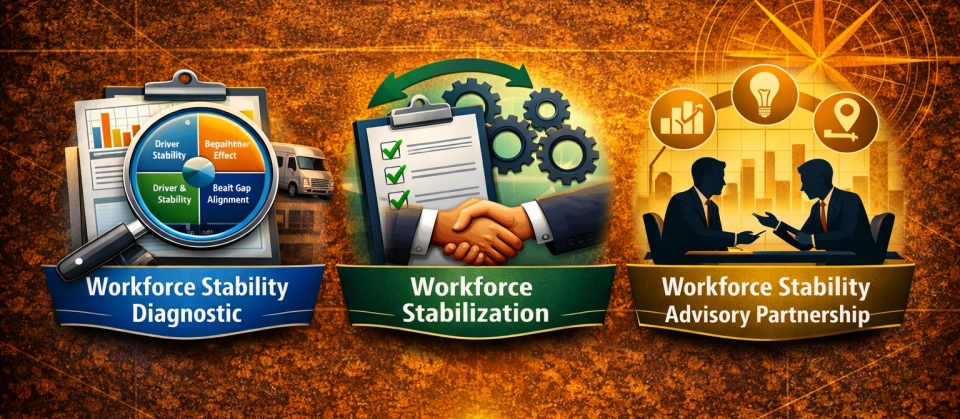
TranSpire engagements follow a progressive approach designed to help fleet leadership first understand instability, then address it, and finally maintain long-term operational alignment.
This process typically begins with a diagnostic review of the operational forces influencing driver stability. Once instability patterns are understood, organizations may choose to implement stabilization efforts designed to restore alignment between recruiting expectations, operational processes, and leadership communication.
For organizations seeking long-term guidance, an advisory partnership can provide ongoing leadership support to maintain workforce stability as the operation grows and evolves.
The TranSpire Workforce Stability Engagement Structure
Workforce Stability Executive Brief™
Identify hidden workforce risks before they become turnover problems.
Workforce Stability Diagnostic™
Understanding the operational forces influencing driver turnover, recruiting pressure, and empty trucks.
Workforce Stabilization Program™
Restoring alignment between recruiting expectations, operational experience, and leadership communication.
Workforce Stability Advisory Partnership™
Ongoing strategic guidance focused on maintaining workforce stability within the operation.
Why This Approach Matters
Workforce instability rarely affects recruiting alone.
Over time, it can influence dispatch workloads, driver experience, operational consistency, and equipment utilization. Understanding how these forces interact provides fleet leadership with a clearer perspective on the underlying dynamics shaping workforce stability.
The following engagements outline how organizations can begin to evaluate and improve workforce stability within their operations.
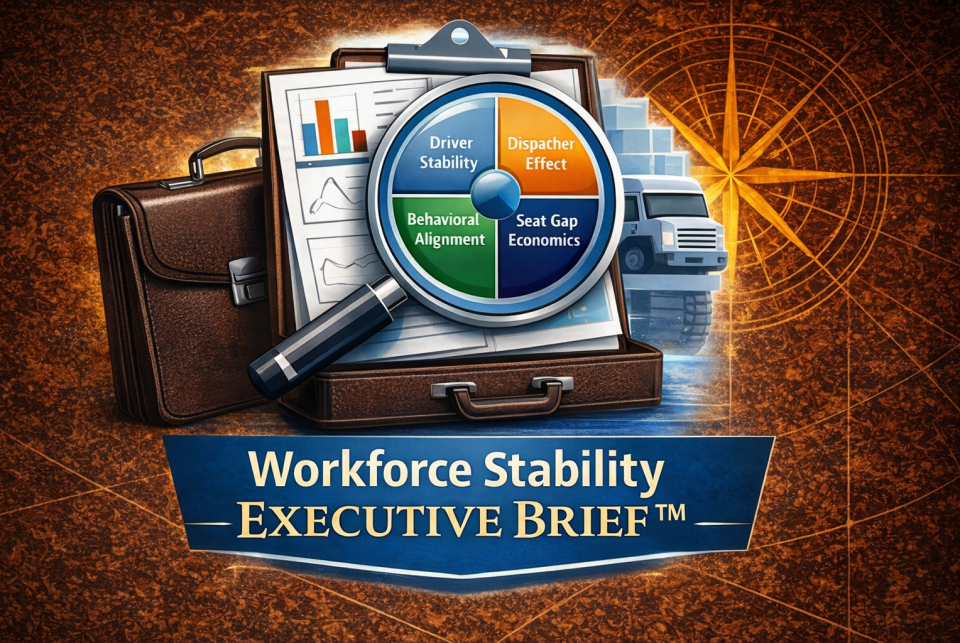
Identify hidden workforce risks before they become turnover problems.
Workforce Stability Executive Brief™
Most fleets believe they have a recruiting problem. However, in reality, recruiting pressure often stems from deeper operational misalignment. When hiring expectations, dispatch communication, and early driver experience are not aligned, fleets experience constant recruiting pressure and driver turnover.
The Workforce Stability Executive Brief™ helps leadership teams identify whether those risks may exist inside their operation.
Does any of these sound familiar?
- You constantly feel pressure to recruit drivers.
- Some drivers leave within the first 90 days.
- Dispatch relationships with drivers can become strained.
- Trucks occasionally sit unoccupied despite active recruiting.
- Recruiting costs keep increasing without solving the problem.
These are often indicators of Workforce Instability rather than simply a recruiting challenge.
This Executive Brief Is..
The Workforce Stability Executive Brief™ is a short executive insight report prepared based on your leadership questionnaire. It introduces the key workforce stability frameworks that we use to evaluate driver retention and operational alignment. Your report highlights potential indicators of workforce instability and provides leadership reflection points. It is designed to help executives determine whether deeper analysis would provide value.
What You Will Receive
Each Workforce Stability Executive Brief™ includes:
Workforce Stability Overview: An explanation of the operational forces that influence driver retention.
Workforce Stability Leadership Assessment: Analysis based on your questionnaire responses.
Seat Gap Economics Snapshot™: Understanding the revenue impact of unseated trucks.
Workforce Stability Framework Overview: Introduction to the frameworks used to analyze retention patterns:
- Driver Stability Triangle™
- Dispatcher Effect™
- Behavioral Alignment Integration™
- Seat Gap Economics™
Strategic Observations: Potential indicators of workforce instability within your operation.
Recommended Next Steps: Guidance for leadership consideration.
Who This Is Designed For
This is best suited for fleets that:
- Small to mid-size fleets, 200 units and under.
- Experience ongoing recruiting pressure.
- Want to understand driver turnover patterns.
- Have unseated trucks affecting productivity.
- Want leadership insight before investing in consulting.
This Is Not For
This offer is not designed for fleets that are seeking:
- Staffing services.
- Rapid hiring programs.
- Immediate recruiting solutions.
Those needs are best addressed through our Workforce Stabilization Program™.
Investment
Workforce Stability Executive Brief™
Investment: $149
Includes:
- Workforce Stability Executive Brief Report.
- Seat Gap Economics snapshot.
- Leadership reflection questions.
- Recommended next steps.
Optional Purchase
By enrolling in the Workforce Stability Executive Brief, you can order your copy of the Recruiting Reality Check™ at a discounted price of $19.95 + $4.99 Shipping and handling. That is a savings of $59.00, and my way of showing my appreciation for you signing up for our Workforce Stability Executive Brief. Merely let us know if this is something you are interested in when enrolling.
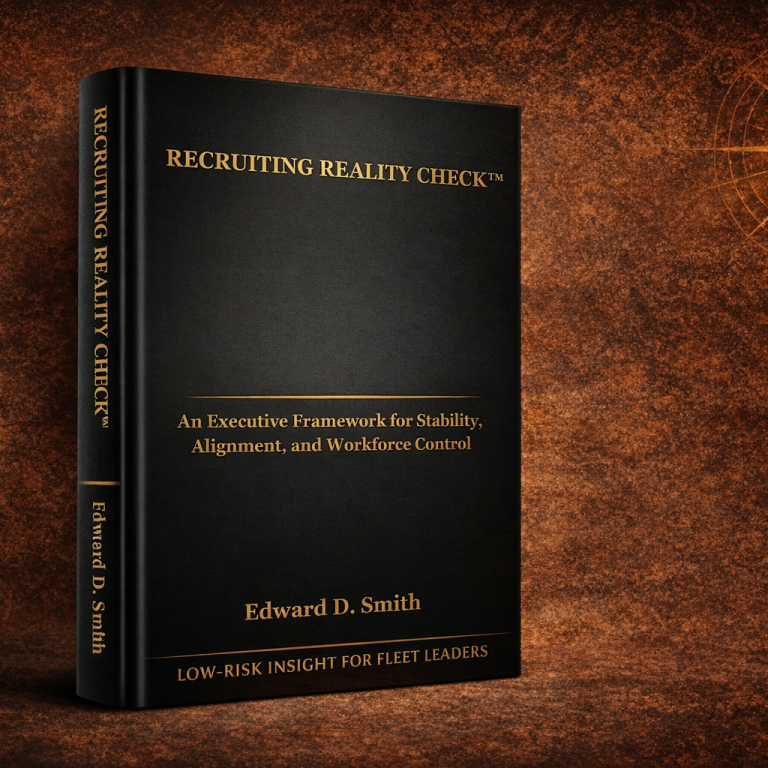
Available on Amazon, or optional discounted purchase upon enrollment of Workforce Stability Executive Brief™
Recruiting Reality Check™
Most recruiting problems in transportation do not begin with recruiting. They begin with:
- Misalignment.
- Empty seats.
- Expectation drift.
- Early trust breakdowns.
- Operational friction is normalized as “just part of the industry.”
Over time, these disconnects compound into:
- Increased seat gap percentage.
- Margin erosion.
- Recruiting pressure.
- Cultural instability.
Recruiting Reality Check™ is not a hiring manual. It is an executive risk brief. Inside, transportation leaders will gain clarity on:
- The real financial exposure of seat instability.
- Where turnover actually begins.
- How vendor incentive structures influence outcomes.
- The metrics that protect stability, and those that mislead.
- Why leadership ownership determines long-term retention.
This document was written for leaders willing to examine systems, not symptoms.
Understanding the operational forces influencing driver turnover, recruiting pressure, and empty trucks.
Workforce Stability Diagnostic™
The Operational Pattern Many Fleets Experience
Across the trucking industry, many fleets operate within a continuous recruiting cycle. Drivers leave, recruiters search for replacements, and the process begins again. Over time, this pattern becomes accepted as a normal part of operating a fleet. Yet when leadership teams examine their operation more closely, a different question often emerges:
"Why do some fleets recruit constantly while others operate with far greater stability?"
The difference is rarely in recruiting effort. It is usually operational alignment.
Understanding that alignment is the purpose of the Workforce Stability Diagnostic.
Why Recruiting Pressure Often Persists
Most fleets evaluate driver turnover through recruiting metrics.
- Applications.
- Hire counts.
- Time to seat trucks.
While these metrics are useful, they rarely explain why instability occurs inside the operation.
Workforce instability is usually influenced by several operational forces working together:
- Recruiting expectations presented to drivers.
- Operational experiences after onboarding.
- Dispatch communication patterns.
- Leadership visibility within the fleet.
When these elements drift apart, recruiting pressure increases and turnover begins accelerating.
What the Workforce Stability Diagnostic Evaluates
The Workforce Stability Diagnostic provides a structured review of the operational forces influencing driver stability.
This evaluation examines areas including:
- Recruiting Expectations: How driver expectations are established before hiring.
- Driver Operational Experience: What drivers actually encounter once they enter the operation.
- Dispatch Communication Patterns: How dispatch interaction shapes the driver experience.
- Workforce Alignment Indicators: Patterns that often precede increased turnover.
The objective is not simply to review recruiting activity. The objective is to identify the operational forces driving instability.
What Fleet Leadership Typically Gains
Organizations completing the diagnostic often gain:
- Clearer visibility into workforce stability patterns.
- Understanding of operational misalignment affecting retention.
- Leadership awareness of stability indicators.
- Insight into the relationship between turnover and operational structure.
For many fleets, the diagnostic marks the first time the operation is evaluated through a workforce stability lens rather than a recruiting lens.
The Financial Reality Behind Workforce Instability
Workforce instability rarely affects recruiting alone.
It often creates ripple effects across the operation:
- Dispatch workload strain.
- Driver dissatisfaction.
- Inconsistent route coverage.
- Trucks are sitting without drivers.
Over time, these dynamics contribute to Seat Gap Economics™, where unseated trucks quietly create revenue exposure. Understanding the operational drivers behind these patterns is often the first step toward improving stability.
Who This Engagement Is Typically For
The Workforce Stability Diagnostic is often appropriate for fleets experiencing:
- Driver turnover is above 45%.
- Constant recruiting pressure.
- Difficulty keeping trucks seated.
- Dispatch teams are operating under staffing strain.
Engagement Range
Typical engagement range:
$2,500 – $7,500 depending on fleet size and operational scope.
Exact pricing is determined after understanding fleet size, organizational structure, and workforce stability indicators.
Conversation Invitation
Many fleet operations experience instability without fully understanding the operational forces contributing to it. If your organization is evaluating driver turnover, recruiting pressure, or empty trucks within the operation, a Workforce Stability Diagnostic can provide a structured perspective.
Restoring operational alignment that improves driver stability and reduces recruiting pressure.
Workforce Stabilization Program™
When Instability Becomes Operationally Disruptive
In many fleets, instability begins gradually.
- A few drivers leave.
- Recruiting activity increases.
- Dispatch workloads begin to shift.
Over time, the organization adjusts to operating under constant recruiting pressure. Yet this environment often creates additional strain across the operation.
- Dispatch teams operate reactively.
- Driver onboarding cycles accelerate.
- Leadership attention shifts toward recruiting rather than operational alignment.
Eventually, instability becomes embedded in daily operations.
Stabilizing the Workforce System
The Workforce Stabilization Program focuses on restoring alignment between the operational forces that influence driver stability.
These forces include:
- Recruiting Expectations: Ensuring drivers enter the operation with accurate expectations.
- Operational Experience: Aligning driver experience with recruiting commitments.
- Dispatch Communication Dynamics: Improving operational communication patterns.
- Leadership Visibility: Strengthening the relationship between leadership and drivers.
The objective is to improve workforce stability rather than simply increasing recruiting activity.
Program Focus Areas
Organizations participating in the stabilization program often address areas such as:
- Expectation clarity during recruiting.
- Onboarding experience alignment.
- Dispatch communication structure.
- Leadership engagement with drivers.
These adjustments help reduce instability patterns that contribute to turnover.
Operational Outcomes Often Observed
Organizations implementing workforce stabilization strategies often experience:
- Improved driver retention.
- Reduced recruiting pressure.
- Improved dispatch-driver communication.
- Greater operational consistency.
While every fleet operates differently, restoring alignment between operational forces often improves workforce stability.
Engagement Range
Typical engagement range:
$12,000 – $35,000 depending on fleet size and implementation scope.
Exact pricing is determined after understanding fleet size, organizational structure, and workforce stability indicators.
Advisory Partnership
Organizations completing the Workforce Stabilization Program may choose to continue with the Workforce Stability Advisory Partnership, which provides ongoing leadership support to maintain operational stability.
This advisory engagement is typically offered only after stabilization work has been completed.
Conversation Invitation
Many fleet leaders recognize instability within their operations, but have not yet had the opportunity to evaluate the operational forces contributing to it. If your organization is experiencing persistent recruiting pressure or workforce instability, the Workforce Stabilization Program can help restore operational alignment.

Ongoing strategic guidance for maintaining workforce stability across fleet operations.
Workforce Stability Advisory Partnership™
Introduction
Workforce stability is not achieved through a single initiative. Even after operational alignment improves, fleets continue to evolve. Routes change. Driver expectations shift. Leadership structures expand. Recruiting strategies adapt. Without continued attention, workforce instability can gradually return.
The Workforce Stability Advisory Partnership provides ongoing leadership-level guidance to maintain alignment among recruiting expectations, operational experience, and workforce communication. This engagement is typically offered to organizations that have completed the Workforce Stabilization Program and wish to maintain operational stability as their fleet continues to grow.
Why Ongoing Stability Oversight Matters
Many fleets experience improved stability after addressing operational misalignment. However, over time, several factors can reintroduce instability:
- Operational growth.
- Changes in dispatch structure.
- Evolving recruiting practices.
- Shifts in driver expectations.
Without continued oversight, these adjustments can slowly recreate the same patterns of instability that previously existed. The advisory partnership provides leadership teams with a structured approach to monitoring and maintaining workforce stability.
Advisory Focus Areas
The Workforce Stability Advisory Partnership typically focuses on areas such as:
- Workforce Stability Monitoring: Reviewing stability indicators across the operation.
- Recruiting Alignment Guidance: Ensuring recruiting expectations remain consistent with operational reality.
- Dispatch Communication Dynamics: Evaluating communication patterns influencing driver experience.
- Leadership Visibility and Culture: Strengthening leadership engagement with drivers.
What This Partnership Provides
The advisory partnership provides fleet leadership with:
- Strategic perspective on workforce stability.
- Periodic operational reviews.
- Guidance on stability indicators.
- Leadership insight into workforce alignment.
The objective is not day-to-day operational management. The objective is to maintain long-term workforce stability as the organization evolves.
Typical Advisory Structure
Advisory partnerships may include:
- Monthly or quarterly leadership consultations.
- Workforce stability monitoring discussions.
- Operational alignment guidance.
- Strategic recruiting perspective.
The structure can be adjusted depending on the needs and size of the fleet.
Engagement Range
Typical advisory partnership range:
$2,500 – $6,000 per month, depending on scope and fleet size.
Advisory engagements are typically offered after completion of the Workforce Stabilization Program to ensure the organization begins from a stable operational foundation. Exact pricing is determined after understanding fleet size, organizational structure, and workforce stability indicators.
Conversation Invitation
Fleet operations rarely remain static. As organizations grow and evolve, maintaining workforce stability often requires continued leadership attention. For fleets seeking ongoing strategic guidance to maintain operational alignment and driver stability, the Workforce Stability Advisory Partnership provides structured support.