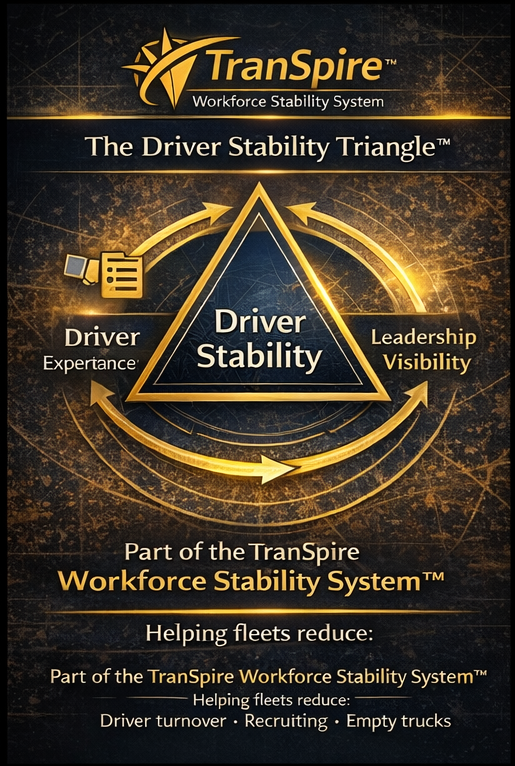
Driver stability begins with operational alignment.
Driver Stability
Drivers rarely leave companies without reason. More often than not, they leave when expectations, experiences, and leadership communication begin to diverge. This dynamic creates instability long before turnover becomes visible in reporting metrics. Understanding this relationship is the foundation of Driver Stability.
The Driver Stability Triangle™
Driver stability reflects alignment between three forces:
- Driver Expectations - What drivers believe the job will be.
- Operational Experience - What drivers actually experience after joining.
- Leadership Visibility - How supported drivers feel within the organization.
When these forces remain aligned, stability increases. When they drift apart, drivers begin evaluating other opportunities.
The First 90 Days
The first 90 Days often reveal whether stability will occur. During this period, drivers unknowingly evaluate:
- Communication with dispatch.
- Operational Workload.
- Leadership accessibility.
- Alignment with expectations.
If the experience differs significantly from expectations, instability begins.
Executive Consequences
Driver instability creates operational ripple effects:
- Increased recruiting pressure.
- Onboarding disruptions.
- Dispatch workload increases.
These consequences eventually appear as rising turnover.
Transition
While driver experience shapes stability, the operational relationship drivers encounter most often is with dispatch.
This dynamic is known as The Dispatcher Effect™.