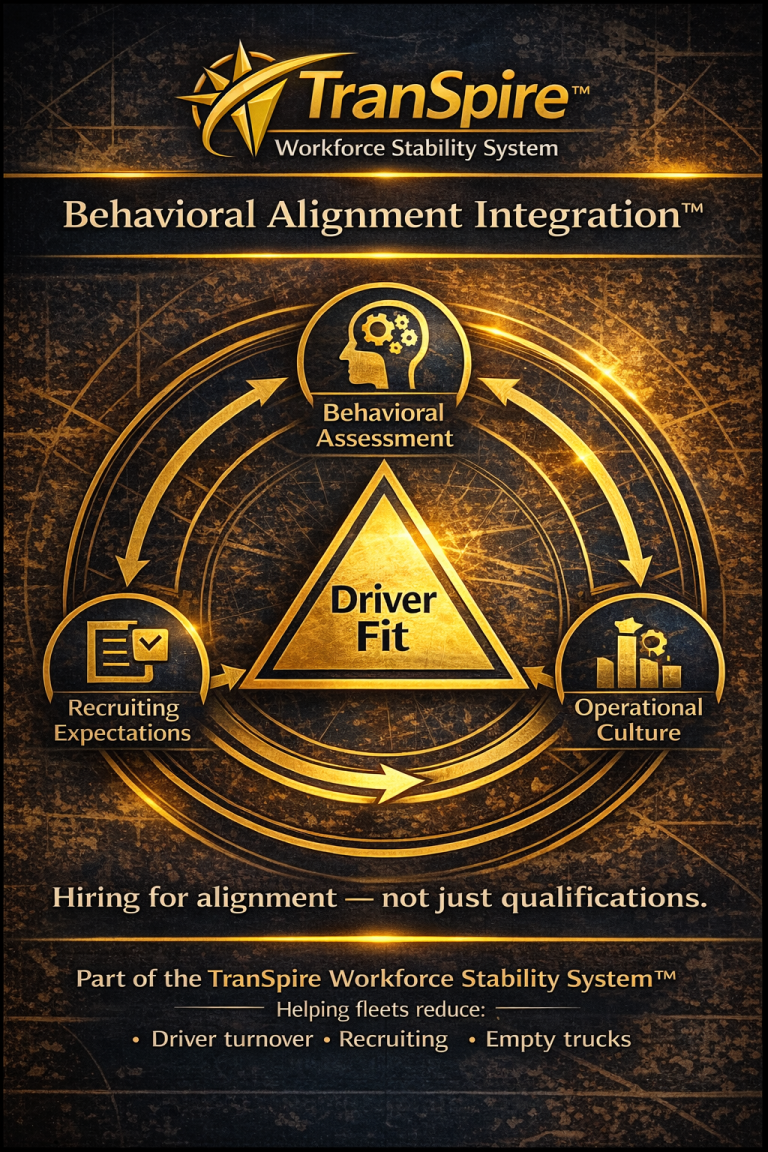
Determining driver fit...
Behavioral Alignment
Hiring for Alignment - Not Just Qualifications
Many hiring decisions focus solely on qualifications. Such as:
- Licensing.
- Experience.
- Driving Record.
- Availability.
While these elements remain necessary, they rarely, if ever, determine long-term stability. Behavioral alignment often plays a larger role.
Behavioral Alignment Integration™
Behavioral alignment assesses whether a driver's natural work style fits the operational environment.
Key factors include:
- Communication style.
- Response to structure.
- Independence versus collaboration.
- Stress tolerance.
Drivers whose behavioral patterns align with operational expectations often integrate more successfully.
Why Alignment Matters
Misalignment can and does create friction between:
- Drivers and dispatch.
- Drivers and operational processes.
- Drivers and company culture.
Over time, this friction contributes to instability.
Executive Consequences
Misalignment increases:
- Early driver turnover.
- Onboarding disruption.
- Recruiting pressure.
Behavioral alignment provides an additional lens for evaluating workforce stability.
Transition
Ultimately, workforce instability creates measurable financial consequences for fleet operations.