Helping Fleets Reduce Driver Turnover, Empty Trucks, and Recruiting Churn
Workforce Stability Advisory and Recruiting for Transportation Fleets
Edward "Ed" D. Smith
Workforce Stability Advisor for Transportation Fleets
The Truth...
THE HARSH REALITY
Most fleets do not struggle because they lack recruiting activity. They struggle becasue their operations never achieved Workforce Stability. Drivers leave faster than they can be integrated into the system. Recruiting desperately struggles to replace them, but the cycle simply continues. This pattern creates hidden operational instability and financial exposure that many organizations never fully calculate. TranSpire was built to help transportation fleets understand and correct the operational forces that drive turnover and empty trucks.
Why Workforce Instability Becomes a Profitability Problem...
The Financial Exposure
Driver turnover is often treated as a staffing issue. In reality, it creates measurable financial exposure across multiple areas of the operation. Every early driver departure triggers new recruiting costs, onboarding disruption, and operational uncertainty.
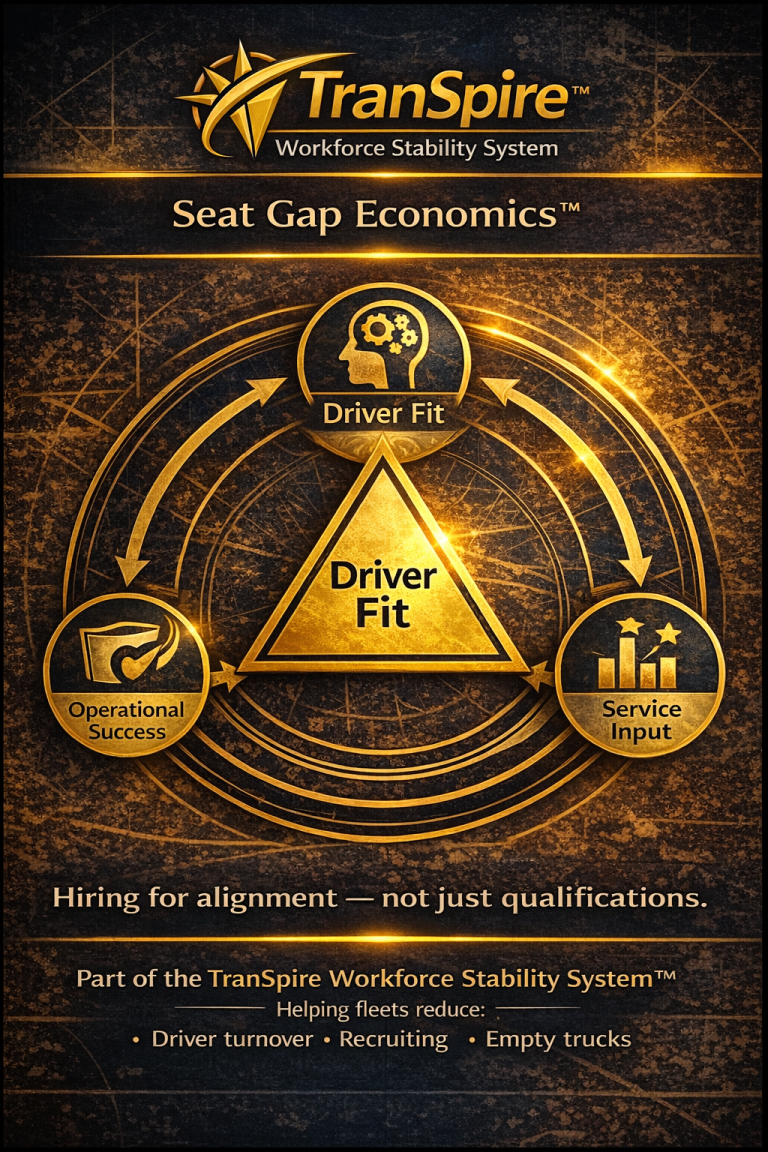
More importantly, when trucks remain without drivers, revenue opportunities disappear while fixed costs continue. This dynamic creates what I describe as Seat Gap Economics™.
Empty seats mean idle equipment. Idle equipment means lost revenue potential. Understanding these hidden costs often changes how fleet leaders evaluate workforce stability.
Understanding the Forces That Dhape Workforce Stability...
The TranSpire Workforce Stability System™
Workforce Stability is influenced by several interconnected operational forces. When these forces align, fleets experience lower turnover and reduced recruiting pressure. When they drift apart, instability increases. The TranSpire Workforce Stability System™ examines five key drivers of stability within a transportation operation.
1. Driver Stability - Retention is influenced by how well recruiting expectations match operational reality. Misalignment between the two often leads to early driver departure.
2. The Dispatcher Effect™ - Drivers interact with dispatch more than any other role inside the company. Dispatch communication patterns frequently shape the daily driver experience and influence retention decisions.
3. Seat Gap Economics™ - Unseated trucks represent lost revenue opportunities. Understanding this financial exposure reframes workforce stability as an operational profitability issue.
4. Behavioral Alignment Integration™ - Drivers with similar qualifications can perform very differently depending on their behavioral alignment with the operations. Evaluating alignment helps reduce avoidable turnover.
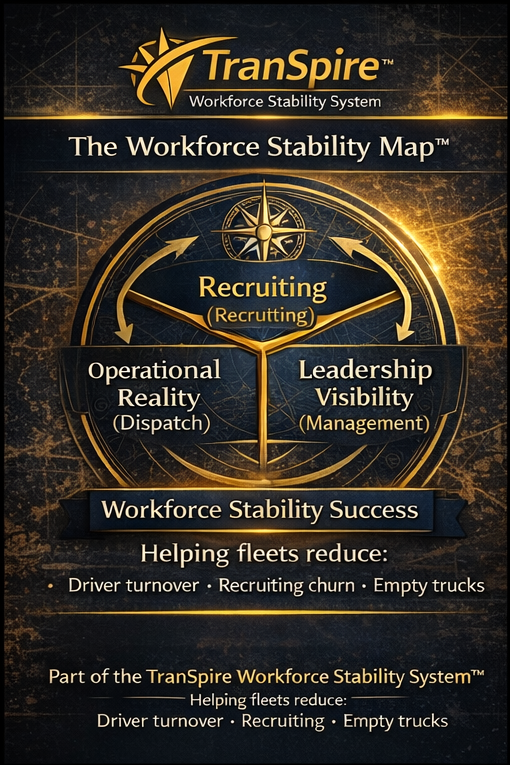
5. Workforce Stability Map™ - These forces combine to shape the overall stability of the fleet workforce. Understanding how they interact allows leaders to address instability at its core.
Putting it all together...
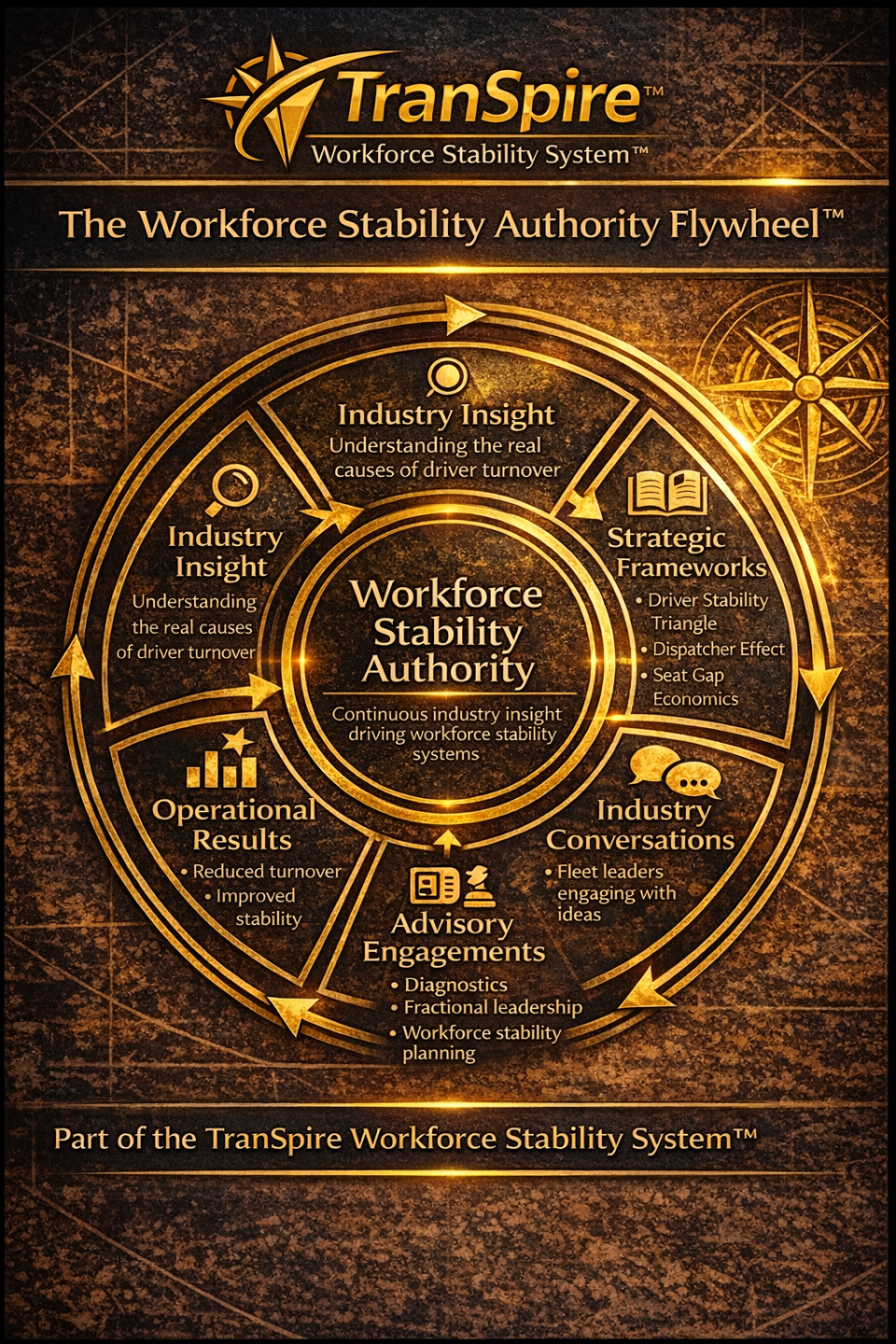
The Architecture Behind The TranSpire Workforce Stability System™
This system includes five operational forces:
- Driver Stability
- Dispatcher Effect
- Seat Gap Economics
- Behavioral Alignment
- Workforce Stability
Click on any of the five above to discover more about each of the forces.
I've lived this myself over the years...
Operational Realities Fleet Leaders Recognize
Fleet operations rarely experience instability for a single reason. More often, instability appears through patterns such as:
- Drivers leaving within the first 90 days.
- Dispatch teams operating under constant recruiting pressure.
- Trucks occasionally sitting without drivers.
- Leadership focusing heavily on recruiting activity.
Over time these patterns can create operational strain across the organization. Understanding how these forces interact is often the first step toward improving workforce stability.